


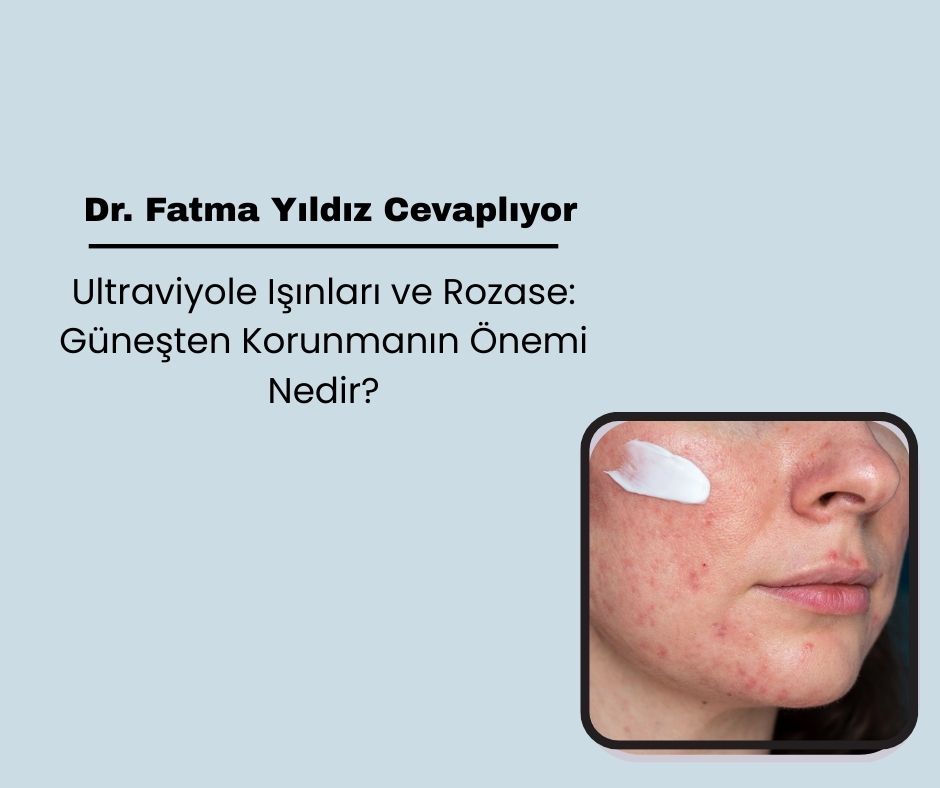

What is the Importance of Sun Protection in Rosacea?
Rosacea is a chronic inflammatory skin disease that affects the central areas of the face, especially the malar region, forehead, chin and nose. It progresses with different clinical appearances such as erythema, papule, pustule, edema and telangiectasia. Abnormalities in the innate immune system, neurovascular dysregulation and genetic predisposition are the main factors in the pathogenesis of rosacea. However, it is known that environmental factors also play an important role in the exacerbation of the disease. Ultraviolet (UV) rays are the most important of these environmental triggers.
Effect of UV Rays on Rosacea
Sun exposure can cause symptoms to worsen in individuals with rosacea. This situation is particularly related to oxidative stress and inflammatory responses caused by UV rays. Therefore, photoprotection, i.e. protection from the sun, should be considered not only as a supportive but also as a preventive strategy in the treatment of rosacea.
Sunscreens: The Right Choice Improves Quality of Life
Modern sunscreens are photostable, broad-spectrum and highly skin-tolerant products. New generation filters such as Mexoryl SX, Tinosorb M and Tinosorb S are used together with old photolabile filters to increase both effectiveness and reduce the risk of photoallergic reactions.
Physical sunscreens (such as zinc oxide and titanium dioxide) reflect UV by forming an opaque layer on the skin. However, since they can cause unwanted side effects such as miliaria and folliculitis due to their large particles, they have been switched to nanoparticle forms. Current studies show that these nanoparticles do not enter the systemic circulation and are safe.
Vitamin D and Sunscreen Use
The concern that sunscreens may suppress vitamin D synthesis has been discussed for years. UVB rays play a critical role in the initiation of vitamin D production in the skin. However, many studies have found that there is no decrease in vitamin D levels that would threaten bone health in individuals who use sunscreen regularly. Moreover, since sunscreens are generally not used at the recommended frequency and amount in daily life, complete inhibition of vitamin D synthesis is rare in practice. Adequate dietary vitamin D intake can also compensate for this potential deficiency.
Safety Discussions in Sunscreens
Oxybenzone (Benzophenone-3): It has been claimed that oxybenzone, a broad-spectrum filter, may affect hormonal balance. However, in human studies to date, systemic absorption of this agent has not been found to be at a level that would cause hormonal disorders.
Retinyl Palmitate: Some in vitro studies have shown that retinyl palmitate reacts with UVA and produces free radicals. However, considering the antioxidant defense systems in human skin, there is insufficient clinical data to support a photocarcinogenic risk.
Nanoparticles: Nanoparticles of substances such as titanium dioxide and zinc oxide are better adapted to the skin and pose less risk of irritation. Recent studies have shown that these particles do not penetrate the stratum corneum layer, i.e., they do not undergo systemic absorption.
Conclusion
Protection from ultraviolet rays, which are effective in the pathogenesis of rosacea, both increases the success of treatment and prevents the disease from flaring up. Sunscreens are an indispensable tool in this process, and current data on safe use is positive. Sunscreens selected under the supervision of a dermatologist and applied appropriately can significantly improve the quality of life of patients with rosacea.
We, as Ankara Life Dermatology Clinic, would be pleased to assist you with the right sunscreen selection, a special approach to your personal needs and scientific support in your rosacea treatment. You can contact Dr. Fatma Yıldız for detailed information and an appointment.
 Call
Call
 Whatsapp