


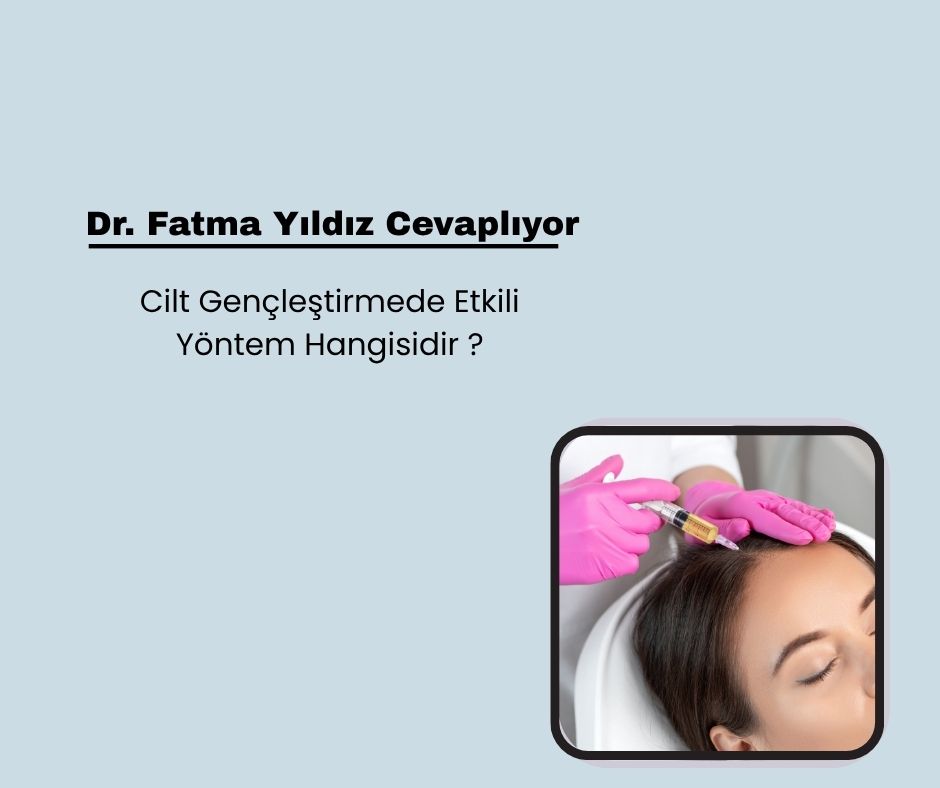

What is the Most Effective Method for Skin Rejuvenation?
Regenerative medicine is becoming increasingly attractive for those seeking to reduce signs of aging, increase skin elasticity, and improve overall skin health. Two of the most notable developments in this field are exosomes and PRP (platelet-rich plasma). Both support the body's natural healing processes, increase collagen production, and are used for skin rejuvenation.
What Do Exosomes Do?
Exosomes are nanovesicles that facilitate intercellular communication and carry biomolecules such as RNA, proteins, amino acids, and lipids. Exosomes, derived primarily from fat stem cells, have properties that reduce inflammation, promote tissue healing, and improve fibroblast function.
In dermatology, exosomes are effectively used for many indications, including acne scars, atopic dermatitis, hair loss, and photoaging. They have been shown to significantly improve skin quality by enhancing dermal remodeling, especially when combined with microneedling and laser treatments.
What is PRP and How is it Applied?
PRP is a plasma product obtained from the patient's own blood and contains a high percentage of platelets. Thanks to its growth factors (PDGF, VEGF, TGF-β), it:
Stimulates collagen production,
Supports new blood vessel formation (angiogenesis),
Restructures skin tissue.
PRP can be applied topically or by injection after procedures such as microneedling and fractional laser. Clinical experience shows that PRP treatments result in skin tightening, a reduction in fine wrinkles, and an even skin tone.
What Does the Comparative Clinical Study Show?
In a recent split-face, blinded clinical study, 15 participants received both exosomes and PRP. PRP was applied to one side of the face and exosomes to the other, and all faces received three sessions of radiofrequency microneedling (RFMN).
Treatment Process:
PRP was prepared by centrifuging the participant's blood.
Exosomes were produced from fat stem cells obtained from healthy donors aged 18–25.
Post-treatment skin care was also tailored to each patient.
What Were the Clinical Findings?
According to researcher assessments and histological analyses:
Both methods resulted in significant improvements in overall skin appearance, wrinkles, discoloration, and texture.
At the end of the month, slightly greater improvements in wrinkles, erythema, and skin texture were noted on the exosome-treated side.
Collagen Type I and glycosaminoglycan (GAG) levels increased significantly in both groups.
An increase in collagen Type III staining intensity was observed, indicating continued tissue remodeling.
What Are the Advantages of Exosomes?
They do not require phlebotomy (blood collection) and are less invasive.
There is no preparation time before application; they are ready to use.
Because it is derived from younger donor cells, it is richer in growth factors.
It exhibits less variability than PRP and offers standardized content.
It has a high safety profile, especially when applied topically rather than injected.
What are the Strengths of PRP?
It is an autologous (taken from the individual) product; it is fully compatible with the immune system.
It has extensive clinical experience and a scientific database.
New-generation PRFM systems can provide long-term release of growth factors.
However, the effectiveness of PRP may vary depending on the patient's age, blood values, and the preparation method used.
Safety Assessment
No serious side effects were observed in either application during the study. Temporary side effects such as mild erythema, edema, and crusting resolved spontaneously within 1 week.
However, literature has reported that injected exosomes can rarely cause serious side effects such as necrotizing granuloma, allergic reactions, and skin necrosis. Therefore, exosomes should only be applied topically for now. The FDA has not yet approved its use by injection.
Conclusion: Should Exosomes Be the Preference for Skin Rejuvenation?
This clinical study demonstrates that both PRP and exosomes are effective and safe options for skin rejuvenation. However, advantages such as:
Its less invasive nature,
Its ready-to-use product,
Its powerful biological content from young donors,
make exosomes an attractive alternative, especially for patients who are afraid of needles or who require a quick procedure.
On the other hand, PRP remains a widely accepted and scientifically sound method. The use of personal biological material, in particular, may be a preferred option for some patients.
 Call
Call
 Whatsapp