


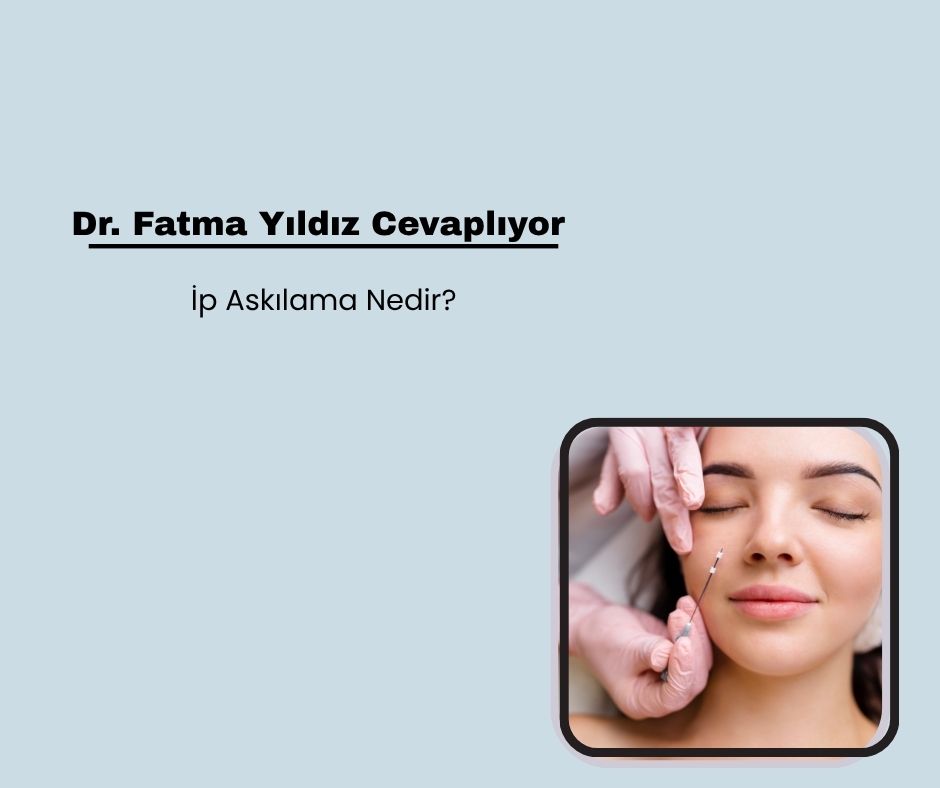

What is Thread Lift?
Thread lift is based on the principle of placing dissolvable, toothed, or flat threads under the skin to reposition facial tissues upward. The goal is to correct sagging, define the facial contour, and create a rejuvenating effect. However, this procedure is performed in an area where the face is comprised of many complex anatomical structures, such as capillaries, major arteries, facial nerves, and fat compartments.
Therefore, to achieve success and minimize the risk of complications, the practitioner must be knowledgeable not only in technical terms but also in anatomy.
Why is Understanding Facial Anatomy Crucial in Thread Lift Procedures?
Thread lift, an increasingly popular non-surgical facial rejuvenation method, has gained a significant place in the aesthetic world with its minimally invasive nature and impressive results. However, this procedure requires not only proper technique but also a deep understanding of facial anatomy to achieve success and safety. So, what is the importance of facial vessels, nerves, and other anatomical structures in thread lift? In this article, we discuss how to avoid the most common complications of thread lift procedures and achieve natural-looking results.
Facial Veins: Where Is the Greatest Risk?
One of the most common complications that can occur with thread lift procedures is bleeding and bruising. Minimizing this risk depends on a thorough understanding of the locations of the facial veins. For example:
Temporal region (temple): The superficial temporal artery and superficial veins located here necessitate careful selection of thread insertion points. Otherwise, serious hematomas can occur.
Transverse facial artery: This vessel, which runs close to the parotid gland, should be taken into consideration when placing the threads in the midface.
Zygomatico-orbital artery: Especially in procedures around the eyes, damage to this vessel can lead to serious aesthetic and functional complications.
Facial artery: Because it runs very superficially in procedures on the cheek and nasolabial region, significant bleeding and long-term bruising can occur if care is not taken.
Facial Nerves: Protecting Your Smile is in Your Hands
Damage to the facial nerves during thread lift can have serious consequences, such as temporary or permanent facial paralysis. In particular, structures such as:
Branches of the facial nerve,
Frontal nerve, and
Zygomatic nerve must be protected.
A practitioner's understanding of the possible routes of these nerves eliminates these risks by ensuring the threads are placed at the correct depth and direction.
Fat Compartments and Retaining Ligaments: The Key to Natural Results
The changing structures of the face due to aging should also be taken into account during thread lift. The downward sagging of the facial fat compartments with age is the primary cause of sagging. Proper placement of threads in these areas can offset volume loss.
Furthermore, ligamentous structures called retaining ligaments (e.g., the zygomatic ligament) play a critical role in the durability and effectiveness of thread lift. A lift performed with these ligaments in mind allows for a more balanced elevation of the subcutaneous tissues.
Which Layer, Which Technique?
The choice of anatomical layer where the threads will be placed directly affects the success of the procedure:
Supra-SMAS placement (above the SMAS): This is generally the preferred safe layer. It is easier to avoid superficial arteries and nerves.
Sub-SMAS and intra-SMAS placement: This is preferred for patients with thick skin who require a deeper lift. However, this technique requires more experience and carries a higher risk of nerve damage.
In addition, antegrade (thread placement from top to bottom) and retrograde (thread placement from bottom to top) techniques should be selected based on the targeted effect and area.
Conclusion: Aesthetic Success Begins with Anatomical Knowledge
Thread lift surgery is directly related to detailed knowledge of facial anatomy, as well as correct patient selection, appropriate technique, and high-quality threads. Applications that fail to consider vascular structures, nerve pathways, fat compartments, and retaining ligaments can lead to undesirable outcomes such as hematoma, facial asymmetry, nerve damage, and dissatisfaction.
Success in aesthetic procedures is not a coincidence; it is a matter of knowledge. For this reason, it is extremely important for individuals who want to have thread suspension to work with experts who are experienced in this field and have strong knowledge of anatomy.
 Call
Call
 Whatsapp