


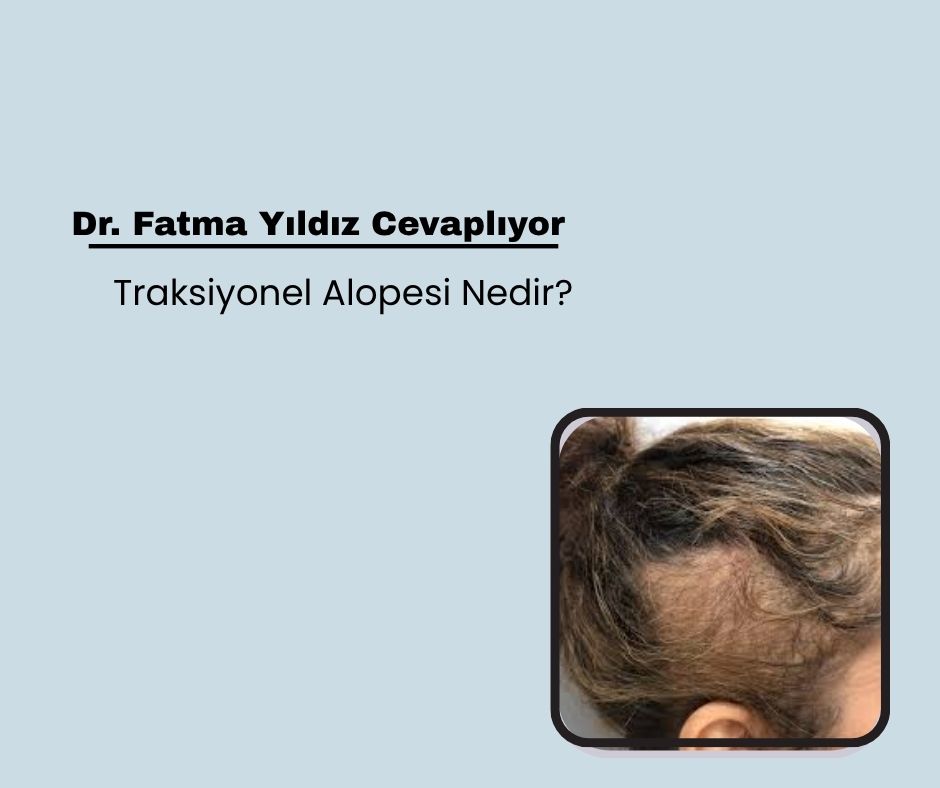

What is Traction Alopecia?
Think When You Stretch Your Hair
Traction alopecia (TA) is a type of hair loss that occurs as a result of the constant stretching of the hair and can become permanent over time. Practices such as tying hair tightly, braiding, buns, wig bonding or continuous hair extensions pave the way for this type of hair loss. Unfortunately, such habits can damage the hair follicles over time and lead to irreversible hair loss.
How Does Traction Alopecia Occur?
Traction alopecia was first described in 1907. Thinning was noticed especially in the forehead line and temples in women who tied their hair tightly. Although this disease seems to be only a cosmetic problem, it is closely related to the cultural hair styling habits of societies.
The reason why it is especially common among women of African origin is the traditionally preferred tight braids, buns and wig bonding. However, as tight hair styling methods become widespread in different ethnic groups due to the influence of fashion today, TA cases are increasing.
Who is More Common?
Women who use tight hairstyles (especially ponytails, tight buns, braids)
Individuals who use wigs or hair extensions
Children who constantly pull or play with their hair
Dancers, stewardesses and some professional groups
What are the symptoms?
Tractional alopecia usually starts along the hairline. Over time, it spreads towards the temples. Symptoms include:
Hair loss and thinning,
Itching, burning sensation,
Redness and irritation on the scalp,
Scar tissues that leave marks over time (permanent baldness areas).
Diagnosis and Differential Diagnosis
Diagnosis of traction alopecia is made with clinical observation and patient history. However, it should not be confused with conditions such as alopecia areata, lichen planopilaris or central centrifugal cicatricial alopecia, which cause similar findings. A clear diagnosis can be made with trichoscopy and, if necessary, biopsy.
Treatment and Management
The most effective treatment for TA is early diagnosis and eliminating hair pulling, that is, changing habits. If these practices are stopped before the damage becomes permanent, hair may grow back. However, permanent hair loss may be seen in advanced cases.
Topical Treatments
Topical corticosteroids: Used to suppress inflammation.
Minoxidil: Recommended to stimulate hair growth.
Systemic Treatments
In advanced cases, anti-inflammatory treatments (e.g. oral antibiotics) may be used. If scarring has occurred, new hair growth becomes difficult.
Surgical Options
Hair transplantation may be considered for areas of permanent baldness. However, if there is active inflammation, the disease must first be brought under control.
Protective Behaviors
Avoid tying hair tightly.
Avoid chemical treatments that strain the hair roots.
Prevent children from playing with hair.
Review hair care habits.
Conclusion
Traction alopecia is a disease that can be prevented with awareness. Some habits, especially those done by women for the sake of beauty, can cause hair loss. Therefore, avoiding strict hair styling practices and being gentle on the scalp are the most important treatment methods for TA.
Hair is not only a beauty element, it is also a part of our identity. It is always easier to protect it before losing it.
Dr. Fatma Yıldız
Dermatology Specialist
Ankara Life Polyclinic
 Call
Call
 Whatsapp