


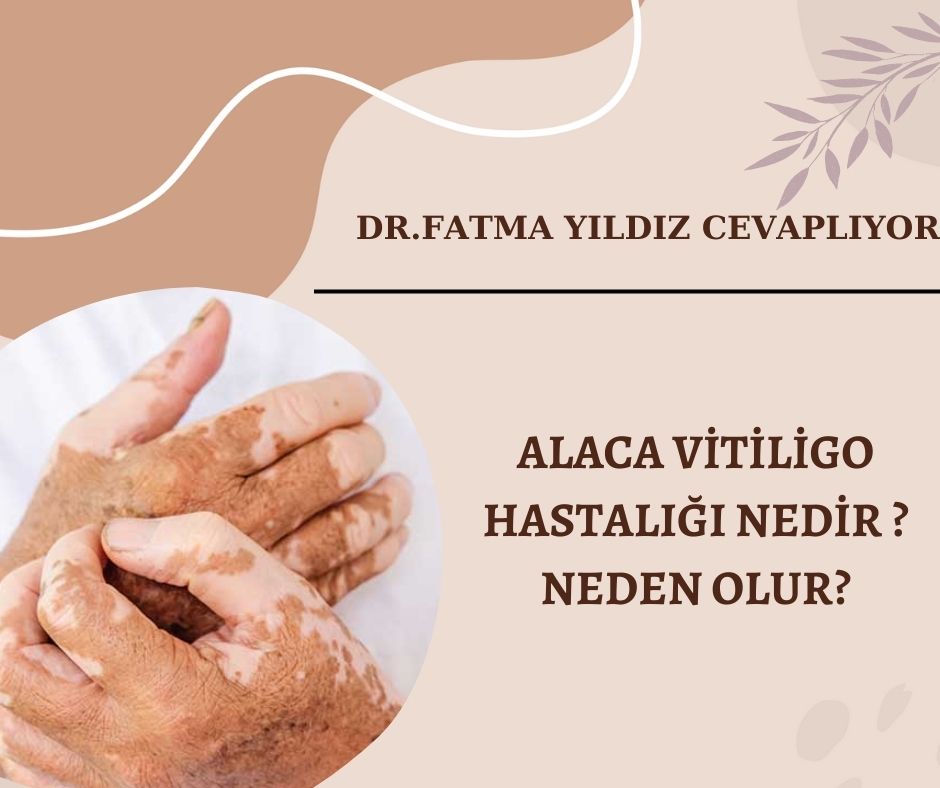

WHAT IS VITILIGO DISEASE? WHAT CAUSES IT?
Vitiligo is a skin disease known among the public as "vitiligo disease". It causes color loss in the skin and hair follicles and shows itself in the form of white spots. The cells called melanocytes give color to our skin. These cells produce a pigment called melanin and this pigment gives color to the skin.
In vitiligo disease, melanocytes are damaged and lose their functions over time. They become unable to produce melanin and this causes white spots on the skin called vitiligo disease.
According to studies, the incidence of vitiligo disease varies between 0.5% and 2%. This means that approximately one in every hundred people may encounter this disease. Both women and men can experience this disease with equal frequency in different geographical regions and various racial groups.
Although the cause of vitiligo is not fully determined, it is thought that the disease has a multifactorial structure; that is, more than one factor plays a role rather than a single cause. Genetic predisposition, i.e. family history, plays an important role in the emergence of the disease, while autoimmune disorders, i.e. problems in the body's defense system, are among the other factors blamed. However, the exact cause of vitiligo has not yet been fully elucidated. It probably occurs as a result of more than one cause.
 Call
Call
 Whatsapp