


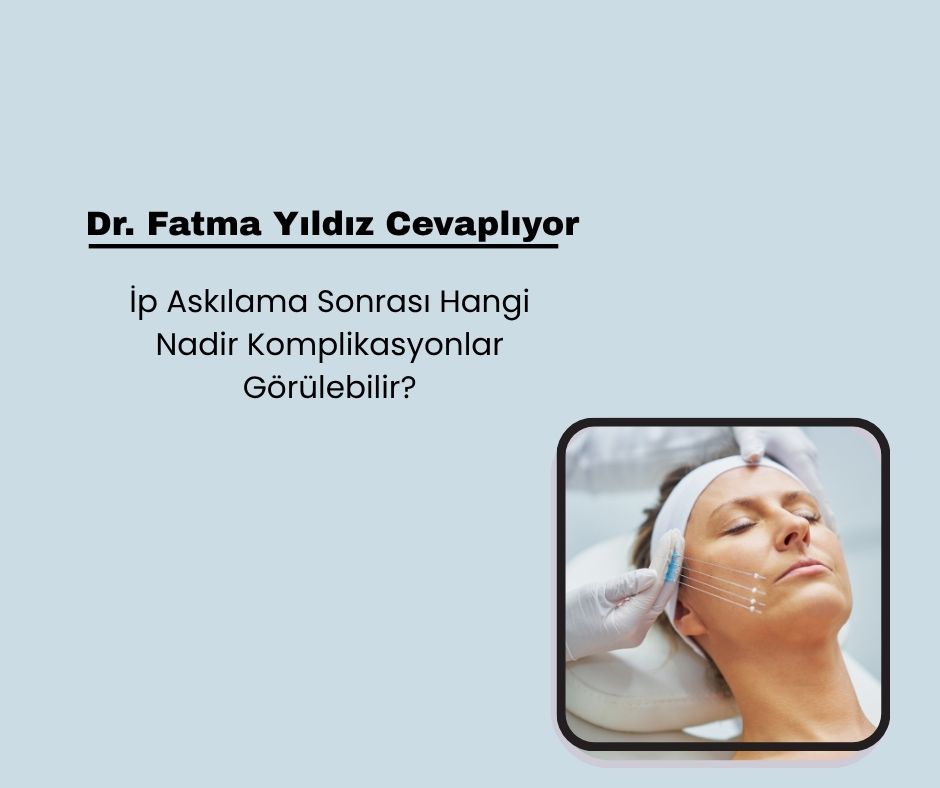

What Rare Complications Can Occur After Thread Lift?
Thread lift procedures are frequently preferred aesthetic procedures for rejuvenating the face and neck without requiring surgical intervention. While generally known for their rapid recovery time and effective results, it's important to remember that these procedures can occasionally lead to complications. This article details the rare but significant complications that can occur after thread lifts, explaining how to recognize, prevent, and manage these issues when necessary.
1. What is Thread Palpation?
After a thread lift procedure, some patients report being able to feel the tip of the thread under the skin with their fingers. This is called thread palpation. Especially when very fine threads are used, pulling the thread directly can cause fractures. Therefore, a careful and slow technique should be employed during removal; the middle of the thread should be gently located and the tip should be carefully removed. This prevents the thread from slipping deeper or causing subcutaneous trauma.
2. How Does Granuloma Formation Develop?
If the thread is placed too superficially or if the application is not sufficiently sterile, an inflammatory reaction may develop in the skin. This can lead to the formation of granulomas, the body's defensive response to foreign substances. Granulomas not only cause aesthetic problems but also increase the risk of infection.
The treatment process begins with controlling the inflammation. If the patient does not wish to have the thread removed, local steroid or 5-fluorouracil (5-FU) injections can be used to reduce the inflammatory response. The best precaution is to prevent granuloma development in the first place: thread placement at the correct depth and the procedure performed under appropriate antiseptic conditions significantly reduces this risk.
3. Is Hyperpigmentation Observed?
Some patients may experience hyperpigmentation, or darkening of the skin, in the areas where the threads were placed. This usually occurs in the sideburns and cheeks. This pigmentation often diminishes over time; however, laser treatments such as picolaser can be used to accelerate the process.
4. What is the Risk of Cannula Residue? In cannulated suture systems, undesirable situations such as the cannula tip becoming lodged in the tissue can occur, although rare. This is particularly common in systems using aluminum cannulas. Manufacturing defects or excessive force during the procedure can cause the cannula tip to break and become embedded in the tissue.
Removal of the broken fragment often requires a surgical incision. Therefore, careful inspection should be performed before using the cannula, and avoiding force if resistance is encountered during the procedure. In addition to product quality, the practitioner's technique is also crucial.
How Can These Complications Be Prevented?
Proper technique should be used, and the sutures should be inserted neither too superficially nor too deeply.
The products used must be reliable, and quality controls should be conducted before the procedure.
Patients should be informed about the potential risks of the procedure so that they can act wisely rather than panic in the event of a potential problem.
Post-procedure checks should not be neglected. Checks within the first two days and then again within 2–4 weeks ensure that complications are detected early and can be addressed promptly.
Conclusion: Maximum Safety with Conscious Application
Thread suspension procedures are quite safe when performed with the right patient selection, quality materials, and experienced hands. However, the rare complications discussed above can be largely prevented or effectively managed with the practitioner's knowledge and attention. Success in aesthetics encompasses not only the outcome but also the safety of the entire process.
If you are looking for a team of experts and experienced professionals in aesthetic procedures who prioritize patient safety,
Ankara Life is here for you.
 Call
Call
 Whatsapp