


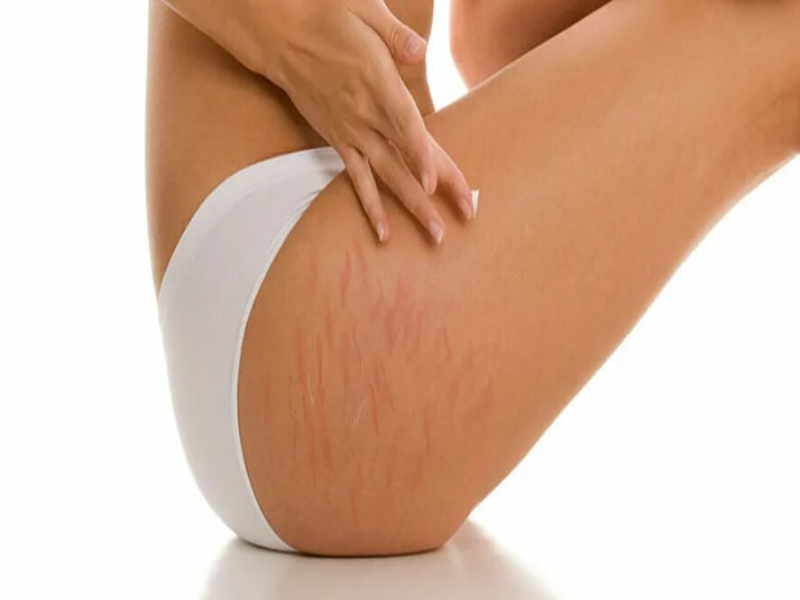

Stretch marks are linear marks or bands that may develop when the skin changes rapidly. They are commonly associated with pregnancy, rapid weight changes, or growth during adolescence. Changes in collagen and elastin structures within the skin contribute to their formation. Stretch marks may initially appear red or purple and can gradually become lighter or whitish over time.
Genetic factors can also play an important role in the development of stretch marks. Having family members with stretch marks may increase individual susceptibility. Hormonal influences may also affect skin structure and contribute to their formation. Increased glucocorticoid activity, for example, can influence connective tissue and may be associated with a greater tendency to develop stretch marks.
Stretch marks may cause cosmetic concerns for some individuals, although they are generally not dangerous to health by themselves. Many people nevertheless seek treatment to reduce their visibility. Different procedural options for Stretch Mark Treatment are available in Ankara, but the appropriate method depends on the characteristics of the stretch marks and the individual's skin.
Stretch Mark Treatment in Ankara: General Information
A range of different procedures for stretch marks is available in Ankara. Their main goal is generally to reduce the visible contrast or textural irregularity of stretch marks rather than restore the skin completely to its previous appearance. Treatment selection may depend on skin type, the stage and color of the stretch marks, their location, and their width.
Different clinics may use laser systems, microdermabrasion, chemical peels, microneedling, radiofrequency, or other approaches. Each works through a different mechanism and is not equally suitable for every type of stretch mark. Treatment should therefore be individualized rather than selected only according to the technology available.
When choosing a clinic, professional qualifications, experience with the specific procedure, hygiene standards, and appropriate device selection are important considerations. Centers offering Ankara Laser procedures may evaluate the skin and explain potential benefits, limitations, recovery requirements, and risks before creating a treatment plan.
Methods Used for Stretch Mark Treatment
Laser procedures are among the methods that may be considered for selected stretch marks. Different laser technologies create controlled effects at different skin depths and may support collagen remodeling. Results vary according to the laser system, stretch mark stage, skin phototype, and treatment settings, and more than one session may sometimes be required.
Another method is microdermabrasion, which mechanically exfoliates the outermost skin surface. It may improve selected superficial texture concerns, but its effect on deeper structural stretch marks can be limited. For this reason, it may sometimes be used as part of a broader skin-care plan rather than as a definitive treatment.
Chemical peels may also be considered in selected cases. These treatments use chemical solutions to create controlled exfoliation of specific skin layers. Their suitability and depth must be adjusted carefully, and they should not be assumed to significantly correct all structural stretch marks.
What Should Be Considered Before Stretch Mark Treatment?
Before starting stretch mark treatment, professional evaluation is important. A dermatologist or appropriately qualified medical professional can assess the skin type, location and stage of the stretch marks, medical history, and treatment expectations before determining whether a particular procedure is appropriate.
Maintaining a healthy skin barrier before treatment may also be useful. Appropriate moisturization can help reduce excessive dryness and irritation, but there is no universal requirement that the skin must be kept at a specific level of moisture before every procedure. Avoiding excessive sun exposure or tanning may also be important before selected laser or resurfacing treatments.
Medication use should always be discussed before treatment. Aspirin, anticoagulants, antiplatelet medications, or other prescription drugs should not be stopped without medical guidance. If a procedure may increase bleeding or bruising risk, the clinician performing the treatment and the physician managing the medication should determine whether any adjustment is medically appropriate.
Side Effects and Risks of Stretch Mark Treatment
As with other medical or aesthetic procedures, stretch mark treatments can have side effects. Temporary redness, swelling, warmth, dryness, or sensitivity may occur depending on the treatment performed. Their duration varies according to the device, treatment intensity, body area, and individual skin response.
Less commonly, pigment changes, prolonged irritation, infection, blistering, or scarring may occur after certain procedures. Risk is influenced by treatment type, device settings, skin phototype, aftercare, and individual healing characteristics rather than professional experience alone.
Following individualized aftercare instructions can help reduce avoidable risks. Unexpected or worsening pain, marked swelling, discharge, blistering, spreading redness, or other concerning symptoms should be professionally assessed rather than assumed to be part of normal recovery.
Recovery After Stretch Mark Treatment
Recovery after stretch mark treatment varies according to the procedure and the individual's skin response. Some minimally invasive treatments may involve only short-lived redness or sensitivity, while more intensive procedures may require a longer recovery period. There is no single recovery timeline that applies to every treatment.
Temporary redness, dryness, or sensitivity may occur after treatment. Appropriate moisturization, gentle skin care, and sun protection may help support the skin barrier during recovery. Balanced nutrition and adequate hydration support general health but should not be considered direct methods for accelerating stretch mark remodeling.
The clinician performing the procedure should provide specific aftercare instructions according to the method used. Following these recommendations can support normal recovery and reduce unnecessary irritation, but it cannot guarantee a particular degree of improvement or eliminate all possible side effects.
Frequently Asked Questions About Stretch Mark Treatment
Common questions about stretch mark treatment generally concern treatment duration, number of sessions, recovery, and expected results. The number of sessions varies according to the procedure, the age and appearance of the stretch marks, the treatment area, and individual response rather than following a fixed schedule.
Another common question is whether results are permanent. Stretch mark treatments may reduce visible contrast or textural irregularity, but they do not usually erase stretch marks completely. Future weight changes, pregnancy, hormonal factors, and skin aging can also influence the appearance of the skin over time.
Treatment cost is another frequently discussed issue. The total cost can vary according to the procedure, treatment area, device, and number of sessions. A clinic may provide individualized cost information after assessing the treatment area and determining an appropriate plan.
 Call
Call
 Whatsapp