


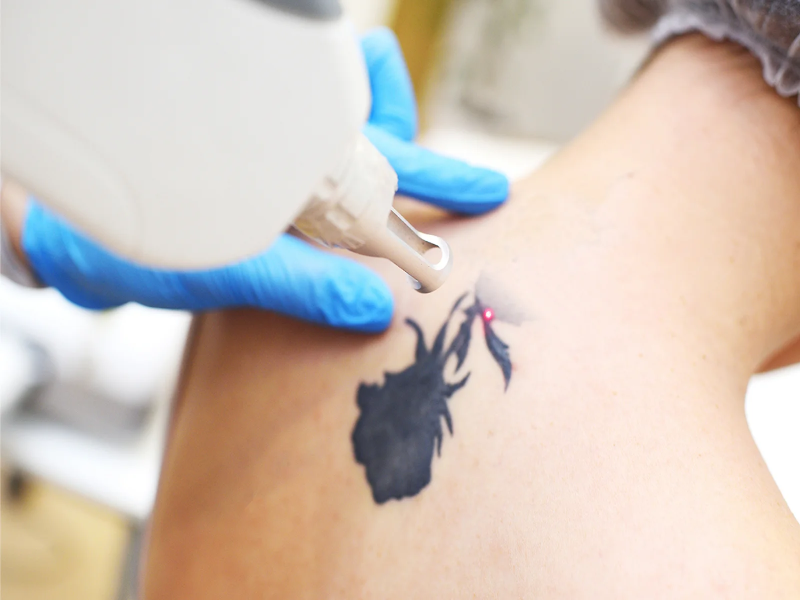

Tattoo removal refers to methods intended to fade or remove as much tattoo pigment as possible. People may seek treatment because of changing preferences, professional considerations, or personal reasons. The process varies according to tattoo color, size, ink density, depth, location, and skin characteristics.
Different techniques have historically been used for tattoo removal, but Laser Tattoo Removal is one of the main modern approaches. Laser energy fragments selected pigment particles so that they can be gradually cleared through biological processes. Complete clearance cannot be guaranteed.
The appropriate approach differs between individuals. Professional assessment is important before treatment, and various clinics in Ankara offer tattoo-removal services.
Tattoo Removal Methods
Laser Tattoo Removal can use different wavelengths to target different tattoo colors. Several sessions are often required, and the tattoo's response should be reassessed over time.
Dermabrasion mechanically removes skin layers and carries a risk of scarring and pigment changes. It is not simply a preferred method for small superficial tattoos.
Chemical destruction or peeling techniques can also cause significant irritation, pigment changes, or scarring and are not generally equivalent to modern laser treatment. Method selection should be based on professional medical assessment.
Tattoo Removal in Ankara
Tattoo Removal in Ankara is offered by different clinics and health-care providers using various technologies. The important factors are appropriate professional qualifications, device selection, patient assessment, and realistic expectations rather than the city itself.
Before treatment, the tattoo's colors, density, depth, location, and skin phototype should be assessed. Some inks respond more readily than others, while certain cosmetic or light-colored pigments may behave unpredictably.
Professional consultation should explain likely limitations, number of sessions, side effects, and aftercare before treatment begins.
What Should Be Known Before Tattoo Removal?
Tattoo removal often requires multiple sessions. The total number cannot be accurately predicted solely from tattoo size or depth because ink chemistry, layering, location, and immune response also matter.
Discomfort is common during laser treatment. Cooling, topical anesthesia, or other comfort measures may be used depending on the procedure and individual.
There is no requirement that the skin be intensively moisturized before treatment to increase effectiveness. Avoiding tanning or excessive sun exposure may be more relevant for selected skin types and laser protocols.
Tattoo Removal Process and Recovery Time
There is no universal 4–8 session course for laser tattoo removal. Some tattoos may require fewer sessions, while professional, multicolored, layered, or resistant tattoos can require considerably more.
Session intervals also vary. They should allow the skin to heal and the body time to clear fragmented pigment. A fixed four-to-six-week interval is not appropriate for every case.
Temporary redness, swelling, blistering, crusting, or sensitivity may occur. Appropriate hygiene can reduce avoidable problems, but aftercare does not eliminate infection or scarring risk.
What Should Be Considered During Tattoo Removal?
Treatment should be performed by an appropriately qualified professional using a suitable laser and settings. Incorrect technique can increase the risk of burns, pigment changes, scarring, or other complications.
Tattoo color, ink composition, skin phototype, location, previous laser exposure, and medical history should be considered during planning.
Aftercare should follow the actual skin response. The area may require gentle cleansing, dressings, barrier-supporting products, or other specific care depending on whether blistering or surface injury has occurred.
Professional follow-up can help determine when another treatment is appropriate and whether the tattoo is responding as expected.
 Call
Call
 Whatsapp