


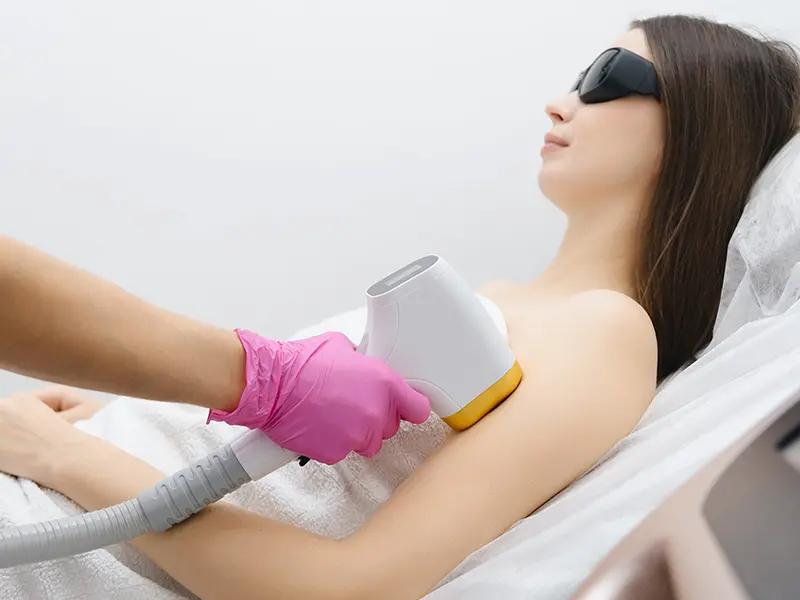

Diode laser is one of the most commonly preferred methods among laser hair removal techniques. Its working principle is based on the absorption of light by the melanin pigment. In this way, it targets hair follicles and helps reduce unwanted hair. Diode laser technology offers compatibility with different skin types and hair colors.
This laser type is particularly known for being effective on deep and thick hair. Compared to other laser types, it has the ability to penetrate deeper layers of the skin. This feature makes diode laser effective for individuals with darker skin tones as well. However, it should be remembered that results may vary from person to person.
Another advantage of diode laser is that it causes minimal discomfort on the skin during the procedure. Modern devices are equipped with cooling systems to provide a more comfortable experience. This helps protect the skin and may reduce possible side effects.
Advantages of Diode Laser
The advantages of diode laser make it a popular choice. First, its adaptability to a wide range of skin and hair types makes it suitable for many individuals. This is especially important for people with darker skin tones, as some other laser types may not be as effective on these skin types.
Second, the deep penetration ability of diode laser may increase the likelihood of achieving long term results. The laser beam reaches the hair follicle more effectively and targets the hair growth cycle. With regular sessions, this may lead to a visible reduction in unwanted hair.
Finally, diode laser has the potential to shorten the treatment duration. Thanks to its ability to scan large areas quickly, session times may be shorter. This can be a significant advantage for individuals with a busy lifestyle.
Which Areas Can Diode Laser Be Applied To?
The question which areas can diode laser be applied to is a common concern for many people considering hair removal. Diode laser technology can be applied to almost every area of the body. However, certain areas are more commonly treated.
Facial Area: It may provide effective results especially on the upper lip, chin, and cheeks. For fine facial hair, diode laser can be a safe option.
Legs and Arms: These areas have large surface areas and can be treated effectively due to the fast scanning capability of diode laser devices.
Bikini Area and Underarms: In these sensitive areas, diode laser may provide effective results while minimizing skin discomfort.
In addition, diode laser can also be used on other areas of the body such as the back, chest, and abdomen. However, since each individual's skin and hair type is different, consulting a specialist to determine the most suitable treatment plan is recommended.
Where Should Laser Hair Removal Not Be Applied?
The question where should laser hair removal not be applied is important for ensuring a safe treatment process. Laser hair removal is not recommended in certain situations or specific areas.
Around the Eyes: Laser beams may cause harm if used near the eyes. Therefore, laser hair removal is generally not recommended in areas close to the eyes.
Over Tattoos: Laser hair removal on tattooed skin may cause irritation or changes in the tattoo color.
Areas with Skin Conditions: Laser hair removal should not be applied to areas with active skin infections, open wounds, or certain skin diseases.
Beyond these limitations, it is important to consider personal health conditions and skin type when planning laser hair removal treatments. Consulting a dermatologist or specialist before starting any treatment is the safest approach.
Laser Types and Their Features
Laser hair removal applications can be performed using different types of lasers. Each laser type offers different advantages depending on skin type and treatment needs.
Alexandrite Laser: Effective for individuals with lighter skin tones and darker hair, this laser type offers a fast treatment process.
Nd:YAG Laser: Recommended for individuals with darker skin tones and capable of penetrating deeper layers of the skin.
Diode Laser: Suitable for various skin and hair types and offers a wide range of treatment applications.
Each of these laser types operates at different wavelengths and uses different treatment techniques. Therefore, consulting a specialist to determine the most suitable laser type based on individual needs is recommended. This can help achieve the most effective results.
Laser Hair Removal Applications
Laser hair removal applications should be performed in a professional environment by qualified specialists. This is important for achieving safe and effective results.
Consultation Session: Before the treatment, the skin and hair type are evaluated. During this stage, information about session duration, the laser type to be used, and expected results is provided.
Treatment Process: During the procedure, the laser device is applied to the target area for a specific period. The device head is placed on the skin to allow the laser light to reach the hair follicles.
Aftercare: Mild redness or sensitivity may occur on the skin after the treatment. Specialists may provide recommendations to help minimize these effects.
The effectiveness of laser hair removal can increase with regular sessions. Typically, a noticeable difference may be observed after about 4 to 8 sessions. However, the number and interval of sessions may vary depending on individual factors.
 Call
Call
 Whatsapp