


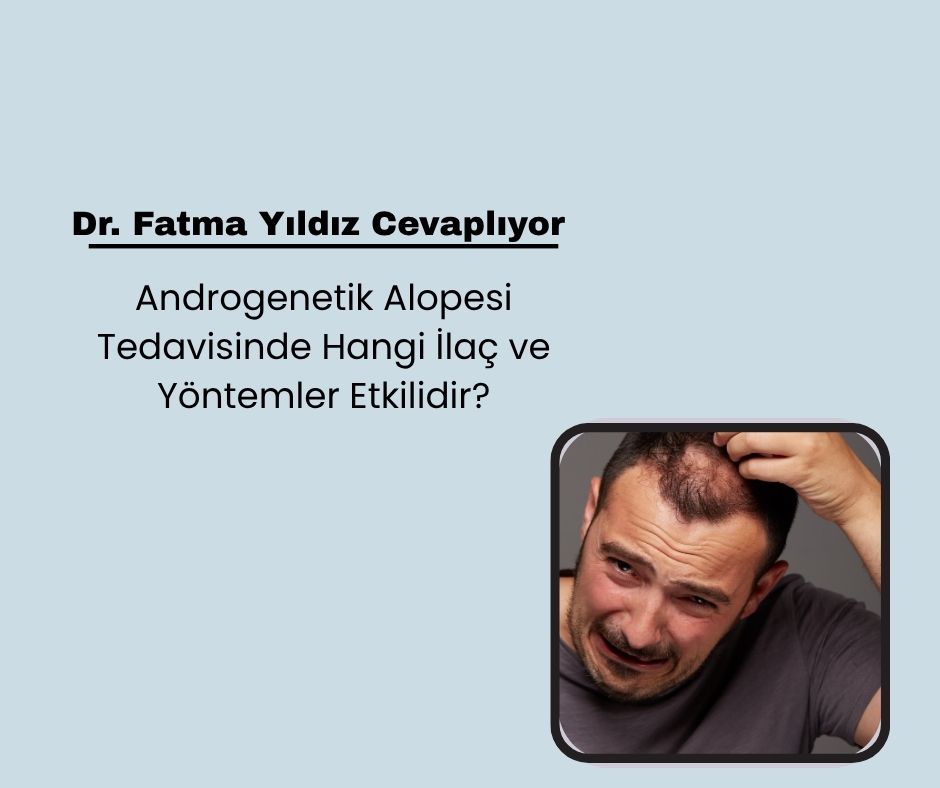

Which Medications and Methods Are Effective in the Treatment of Androgenetic Alopecia?
Hair loss, especially in persistent types like androgenetic alopecia (AGA), can significantly affect a person's appearance and psychology. So, how is this chronic condition, which arises from a genetic predisposition, treated? Which methods are effective and safe?
How effective are oral treatments for AGA?
Oral medications are among the most commonly used methods in the treatment of androgenetic alopecia in men. Their once-daily administration and high patient compliance make these treatments practical. However, each has different mechanisms of action, success rates, and side effect profiles.
What does Finasteride do, and who is it suitable for?
Finasteride blocks the conversion of testosterone to dihydrotestosterone (DHT), which damages hair follicles. It slows hair loss in men and promotes new hair growth. This FDA-approved medication is particularly effective for hair loss on the crown of the head. However, some men may experience sexual side effects (decreased libido and erectile dysfunction). Therefore, it's important to begin with a doctor's consultation, and potential risks should be carefully evaluated.
Monthly cost: Low
Ease of use: High
Duration of effect: Visible results in 6-12 months
Is dutasteride more effective than finasteride?
Unlike finasteride, dutasteride suppresses both type 1 and type 2 enzymes involved in DHT production. This provides greater DHT blockade. Studies have shown that dutasteride reduces DHT by up to 98% and increases hair growth more rapidly. However, because it is not FDA approved, it is generally considered a second-line option.
Dutasteride has also been tested in intralesional (injected into the skin) and topical (applied to the skin) forms, but has been found to be more effective when taken orally.
Monthly cost: Low
Ease of use: High
Duration of effect: Visible results in 3-6 months
Is oral minoxidil safe and effective?
Compared to topical forms, oral minoxidil is one of the more popular alternatives in recent years. It has been found to be safe in both men and women, especially at low doses (0.25-5 mg), and has been shown to increase hair density. However, side effects can include palpitations, edema, and unwanted body hair (hypertrichosis).
Monthly cost: Low
Ease of use: High
Duration of effect: Variable within 4-8 months
Who is suitable for hormonal treatments?
Hormonal treatments are most commonly used to treat female pattern hair loss (FPHL). They can be particularly effective in women with hormonal imbalances, polycystic ovary syndrome (PCOS), or hyperandrogenism.
Does spironolactone stop hair loss?
Spironolactone is a blood pressure medication with antiandrogenic effects and slows hair loss in women by reducing the effects of testosterone. Studies have shown that it maintains hair density and promotes new hair growth. It is generally used in doses of 100-200 mg.
Side effects: Low blood pressure, irregular periods, dizziness
Monthly cost: Moderate
Duration of effect: 6-12 months
Are flutamide and bicalutamide safe?
These drugs have strong antiandrogenic effects. They can be used especially in women who have not responded to other treatments. However, flutamide should be carefully monitored due to the risk of liver toxicity. Bicalutamide, on the other hand, has a better safety profile and should be monitored with liver function tests.
Do laser and light therapies work?
Yes. FDA-approved low-level laser therapy (LLLT) is a non-invasive method that can be applied with at-home devices. Laser light stimulates the hair follicle, triggering new hair growth. Better results can be achieved when combined with minoxidil and finasteride.
Device types: Helmet, comb, band
Frequency of use: 1-3 times daily
Side effects: Minimal (redness, itching are rare)
Cost: Moderate (varies depending on the device type)
What should be considered when choosing a treatment?
There is no single "right" solution for androgenetic alopecia. The following factors should be considered when determining a treatment plan:
Degree and type of hair loss
Gender and age
Medical history and comorbidities
Side effect tolerance
Aesthetic expectations
Budget and treatment compliance
At this point, the physician's ethical responsibility and knowledge are as important as the patient's informed choice.
Ultimately, which treatment is best?
Each individual requires a different solution. Some patients achieve success with topical minoxidil alone, while others may benefit from combined approaches such as oral therapy, laser therapy, or PRP. The key is to create a patient-centered roadmap based on scientific evidence.
 Call
Call
 Whatsapp