


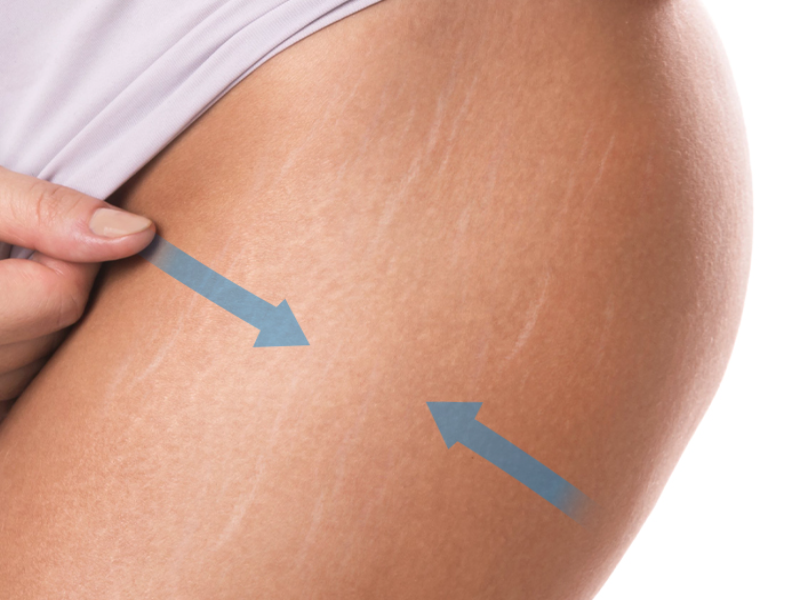

Stretch marks, also known as striae distensae, are linear skin changes associated with alterations in the dermal connective tissue, including collagen and elastin structures. They may develop when the skin changes rapidly, such as during significant weight changes, adolescence, or pregnancy. Hormonal, genetic, and mechanical factors can all contribute to their development.
Stretch marks may initially appear red, pink, or purple and can gradually become lighter, white, or silvery over time. Their color and appearance vary according to skin type, the stage of the stretch marks, and how long they have been present. They are commonly seen on areas such as the abdomen, hips, thighs, breasts, and other regions affected by rapid skin expansion.
The development of stretch marks is more complex than a simple tearing process. Early changes may involve alterations in the dermal structure and inflammatory activity, while older stretch marks tend to become paler and more atrophic. Their appearance and progression vary according to genetic predisposition, hormonal influences, skin characteristics, and the degree of stretching.
Why May Stretch Mark Treatment Be Considered?
Stretch mark treatment is generally considered for cosmetic reasons and because some individuals feel uncomfortable with their appearance. Stretch marks may influence body image or confidence, particularly when they are noticeable in areas that are more visible during certain activities or clothing choices.
Treatment may help reduce the visible contrast or textural irregularity of stretch marks and improve their overall appearance. However, stretch mark treatment should not be described as a method that universally improves general skin health. The aim is usually to make selected stretch marks less noticeable rather than restore the skin completely to its previous condition.
Stretch mark treatment does not necessarily prevent future loss of elasticity or other age-related skin changes. New stretch marks may still develop if additional rapid stretching, hormonal changes, or other contributing factors occur. Treatment should therefore be considered primarily as an approach to improve existing stretch marks rather than as a preventive anti-aging method.
Which Types of Marks May Be Suitable for Stretch Mark Treatment?
Stretch Mark Treatment may be considered for both newer and older stretch marks depending on their color, width, depth, location, and individual skin characteristics. Early reddish or purplish stretch marks and older white stretch marks may respond differently to treatment, so the procedure should be selected according to the stage of the lesion.
Stretch marks that develop during or after pregnancy are among the common reasons individuals seek treatment. Rapid stretching of the abdomen, breasts, hips, or thighs may lead to persistent striae after pregnancy. Treatment may reduce their visible appearance, but returning the skin completely to its pre-pregnancy state cannot be guaranteed.
Stretch marks that appear during adolescence may also be evaluated for treatment. Rapid height growth, changes in body composition, hormonal factors, and genetic predisposition can contribute to their formation. Earlier-stage stretch marks may sometimes respond differently from older ones, but individual results remain variable.
Stretch Mark Treatment Methods in August 2026
In 2026, different procedures continue to be used and studied for improving the appearance of stretch marks. The choice of treatment depends on whether the stretch marks are newer or older, their location, skin phototype, previous treatments, and the individual's expectations. Some commonly considered methods include:
- Laser Treatment: Selected Ankara Laser technologies may be used to create controlled effects in the skin and support tissue remodeling. Different laser systems work in different ways, and suitability depends on the type of stretch mark, skin tone, device, and treatment settings.
- Microneedling: This technique creates controlled microchannels in the skin and stimulates a wound-healing response associated with collagen remodeling. It may be considered for selected stretch marks and some types of scars, although results vary between individuals.
- Chemical Peeling: Chemical peeling creates controlled exfoliation of selected skin layers. It may help with certain superficial color or texture differences, but its effect on deeper structural stretch marks can be limited.
These methods can be adapted according to individual needs and skin characteristics. The treatment process and degree of visible improvement depend on the stage and depth of the stretch marks, the method selected, and individual healing response.
Modern Techniques Used for Stretch Mark Treatment
Modern stretch mark treatment may involve different procedural approaches, sometimes in combination. One option that may be considered in selected treatment plans is PRP (Platelet-Rich Plasma). PRP is prepared from the individual's own blood and contains platelets and growth-related biological factors, but its effectiveness for stretch marks varies and results cannot be guaranteed.
Another group of procedures includes ultrasound-based treatments. Different ultrasound technologies act at different depths and are primarily used for selected skin-remodeling or tightening indications. Their role in stretch mark treatment depends on the specific device and protocol, and they should not automatically be described as particularly effective for deep stretch marks.
Radiofrequency treatments may also be considered in some stretch mark treatment plans. Radiofrequency energy creates controlled thermal effects within selected tissue layers and may support collagen remodeling. The degree of improvement varies according to the technology used, treatment settings, skin characteristics, and the stage of the stretch marks.
What Should Be Considered During Stretch Mark Treatment?
Several factors should be considered during stretch mark treatment. Appropriate skin care before and after certain procedures may help support the skin barrier and reduce unnecessary irritation. Moisturization can be useful for dryness or sensitivity, but it does not guarantee greater treatment effectiveness or faster remodeling of stretch marks.
Balanced nutrition and adequate hydration support general health and normal skin function. However, drinking more water or consuming specific vitamins and minerals should not be expected to directly remove existing stretch marks or significantly increase skin elasticity on their own.
Finally, patience and appropriate follow-up are important because stretch mark improvement generally develops gradually. Complete disappearance of stretch marks cannot be guaranteed, and results vary according to skin characteristics, stretch mark stage, treatment method, and individual response. Professional dermatological assessment can help determine which approach may be more appropriate for a particular type of stretch mark.
 Call
Call
 Whatsapp