


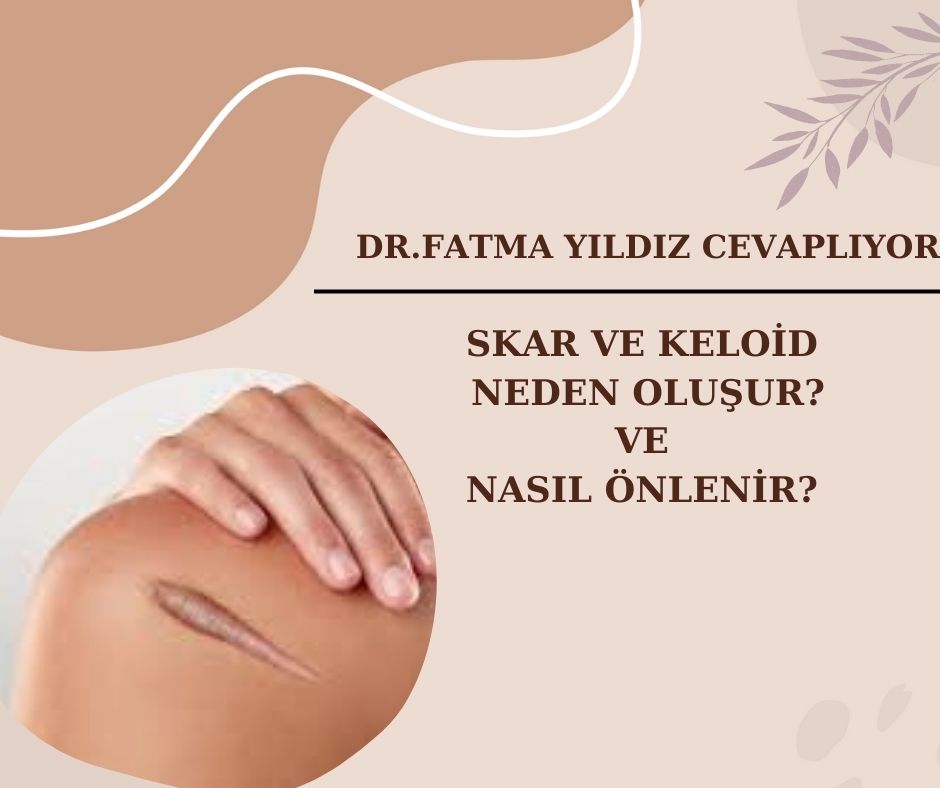

Why Do Scars and Keloids Form and How Can They Be Prevented?
Skin wounds heal differently in each person. While some people may have mild scars, others may develop noticeable and thickened scars. Many factors such as how the body reacts, genetic predisposition, skin type and wound care are effective in this process. So, what are scars and keloids? Why are some people more prone to these scars? And most importantly, how can we prevent them?
• Why do wounds heal more noticeably in some people?
Wound healing is a natural defense mechanism of the body. However, in some people, the skin can exaggerate the healing process by producing excessive collagen. As a result, more tissue than normal is formed and leaves a raised, hard scar on the skin surface. This condition is usually seen more frequently in individuals with a genetic predisposition. If there are people in your family who have had scars or keloids, you are more likely to have similar reactions.
• What is the difference between a scar and a keloid?
A scar is a scar that forms after a wound heals and is usually harder, thicker, and sometimes changes color on the skin surface. It can fade over time and become integrated with the skin.
A keloid is an excessive scar that occurs when a skin wound grows beyond the normal tissue as it heals. Keloids can expand over time and become itchy and painful. Unlike scars, keloids do not shrink on their own and can continue to grow if not treated.
Which wounds are at risk of forming scars and keloids?
Every wound can form a scar, but some wounds are at higher risk than others:
Surgical incisions: Visible scars may remain in areas where stitches were placed after surgery.
Burns: Burns that affect the deep layers of the skin can leave serious scar tissue.
Acne scars: The risk of scarring is high, especially in individuals with inflammatory acne problems.
Piercing and tattooing: The wound healing process may change as a result of piercing procedures, and keloids may develop, especially on the earlobe.
Cuts and scrapes: Even minor injuries can leave visible scars in some people.
Is it possible to prevent scars and keloids?
There are some steps you can take to prevent scars from becoming more visible:
Starting wound care early: Keeping wounds clean and protected from infection is important to support the healing process.
Keeping the wound moist: Dry wounds can leave harder scars. Moisturizing creams or silicone gels can support the healing process.
Not rubbing or squeezing the wound area: Scratching or squeezing can prolong the healing process and cause worse scars.
Protecting from the sun: Sun rays can darken scars. Using high SPF sunscreen can prevent scars from becoming visible.
Applying pressure therapy: Using bandages or special silicone dressings, especially on post-surgical stitch scars, can reduce scar formation.
What are the treatment options?
Many different methods can be applied in scar and keloid treatment:
Silicone gels and dressings: Silicone-based products applied to the wound area can regulate tissue development by maintaining moisture balance.
Corticosteroid injections: This method, which is especially used in keloid treatment, can help reduce scarring by suppressing excess collagen production.
Laser treatment: Scar tissue can be lightened with laser technology and the skin can appear smoother.
Chemical peeling: Chemical peeling can be applied to stimulate skin renewal in light scars.
Surgery: Large keloids or thick scars can be removed with surgical intervention. However, this method should be applied with caution since keloids tend to grow back.
Do home care methods work?
Some natural solutions that can be applied at home can help lighten light scars:
Vitamin E: It can lighten scars by supporting cell renewal with its antioxidant effect.
Onion extract: Some studies show that onion extract can reduce scar formation.
Aloe vera: It can support the healing process by soothing the skin.
However, in cases of large keloids or deep scars, consulting a dermatologist is the best option.
• Does the sun have an effect?
Yes, sun rays can cause scars and keloid tissues to darken and become more visible. Therefore, it is very important to protect scars from the sun and use sunscreens with high SPF.
Do scars and keloids affect psychologically?
Scars and keloids located in prominent places on the face, hands or body can cause loss of self-confidence in individuals. Especially large and widespread scars can have negative effects on social life.
There are both medical and aesthetic treatment options for individuals who are uncomfortable with their skin appearance.
Getting professional support about scars or keloids can provide both physical and psychological relief.
What should I do as a result?
Scar and keloid treatment varies depending on the person's skin structure, wound history and genetic factors
In order to support the healing process of wounds, it is important to take care of them early, protect them from the sun and apply appropriate treatment methods. If scars or keloids bother you, you can create a personalized treatment plan by consulting a dermatologist.
Remember, each individual's skin structure is different and scar and keloid treatment should be planned specifically for the individual. Early intervention, proper skin care and professional support are among the most effective ways to minimize such healing problems.
I am Dermatologist Doctor Fatma Yıldız
We are waiting for you at our clinic, I wish you healthy days.
 Call
Call
 Whatsapp