


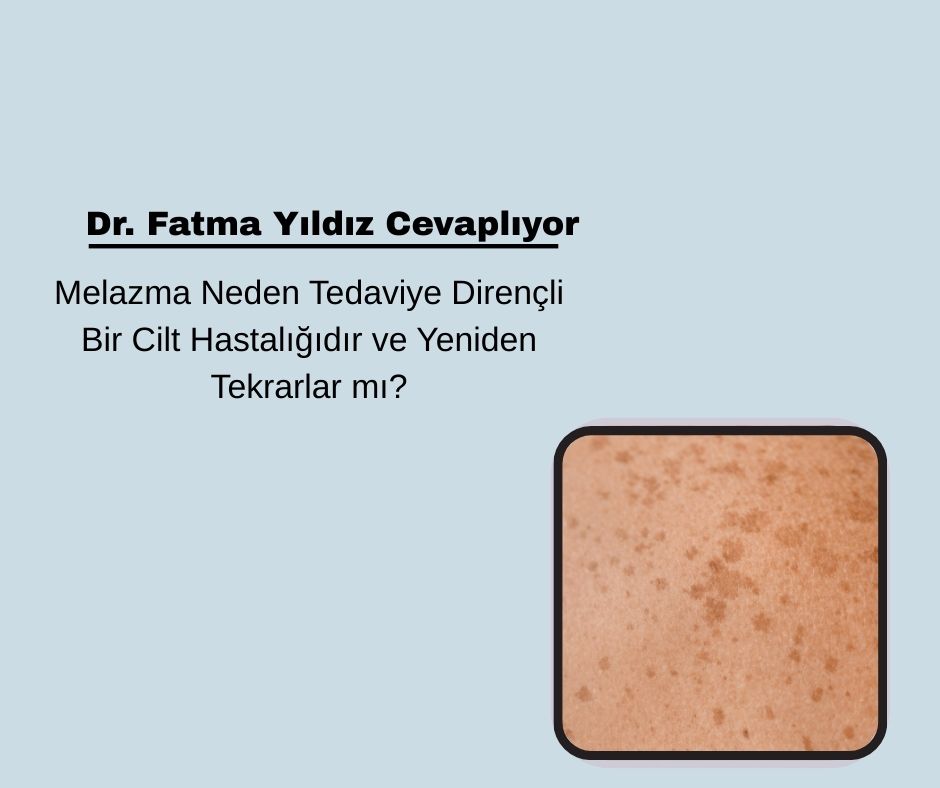

Why Is Melasma a Treatment-Resistant Skin Disease, and Does It Recur?
Melasma is an acquired hyperpigmentation disorder characterized by irregular brown-toned patches, particularly seen on the face. It is more common in women in their 30s and 40s and is particularly prevalent in individuals of Asian descent. Genetic predisposition, chronic exposure to sunlight, and hormonal factors are thought to play a role in the development of the disease. However, the exact pathogenesis of melasma has not yet been fully elucidated.
Treating melasma is quite challenging in dermatological practice. Even if pigmentation is reduced with applied methods, the disease has a high tendency to recur. Therefore, understanding the histological, or microscopic, features of melasma is crucial both in evaluating treatment response and in developing new treatment methods.
So why is melasma a resistant and recurring disease?
Solar Elastosis (Dermal Structure Disorder) in Melasma
Melasma is not limited to increased pigmentation in the epidermis; Changes also occur in the dermis. Solar elastosis is the most common of these changes. Solar elastosis, a result of long-term UV exposure, is characterized by the accumulation of abnormal elastic fibers in the dermis.
Studies have found significant solar elastosis in 83–93% of patients with melasma. This finding suggests that melasma is not only an increase in pigment but also a result of photoaging. Sun damage increases the release of melanogenesis-stimulating cytokines from keratinocytes and fibroblasts, leading to excessive pigmentation in the upper epidermis.
Furthermore, proteins such as WIF-1 and sFRP2, which are involved in the Wnt signaling pathway, have been found to be overexpressed in melasma skin. These biochemical changes accelerate the melanogenesis process, leading to the persistence of spots.
Baseline Membrane Disruption
Another reason melasma is resistant to treatment is the disruption of basement membrane integrity. The basement membrane is a barrier between the epidermis and dermis that controls cellular migration.
Studies in patients with melasma have shown that the basement membrane, which contains type IV collagen, is disrupted, and melanocytes migrate into the dermis. This leads to pigmentation not only remaining on the surface but also extending into deeper layers, making it resistant to treatment.
During chronic UV exposure, an increase in matrix metalloproteinases such as MMP-2 and MMP-9 weakens the basement membrane. This allows melanin to leak into the dermis, be captured by melanophages, and increase the risk of recurrence. Therefore, long-term treatment of melasma requires methods that repair basement membrane damage.
Increased Vascularization (Changes in Vascular Structure)
Melasma skin exhibits more vessels, larger vessel diameters, and increased vascular density compared to normal skin. Studies have reported a 68% increase in vascular density in lesioned areas.
Vascular proliferation is triggered by factors such as VEGF, SCF, and nitric oxide, which increase due to UV exposure. Increased vascularization, in turn, stimulates melanogenesis, contributing to the exacerbation of pigmentation.
These findings demonstrate that melasma is, in fact, a phenotype of the photoaging process and that anti-angiogenic and anti-aging approaches should be considered in treatment.
The Role of Mast Cells
Another striking histological finding in melasma is an increased number of mast cells. Mast cell density is significantly higher in the dermis, particularly in areas with solar elastosis.
UV radiation increases histamine release from mast cells. Histamine, in turn, stimulates melanocyte migration and proliferation, accelerating melanogenesis. Furthermore, tryptase released from mast cells degrades type IV collagen and weakens the basement membrane.
Furthermore, mast cells secrete factors such as VEGF, TGF-β, and FGF-2, which both increase vascularization and trigger solar elastosis. This cascade contributes to the chronicity of melasma.
Methods Used in Melasma Treatment
1. Topical Treatments
Hydroquinone (HQ): Reduces melanin production by inhibiting the tyrosinase enzyme. However, long-term use may cause side effects such as exogenous ochronosis and permanent depigmentation.
Triple Combination Cream (TCC): This combination, containing HQ, tretinoin, and steroids, is the only FDA-approved melasma medication.
New Agents: Safer and more effective tyrosinase inhibitors are under development.
2. Systemic Treatments
Antioxidants (vitamin C, vitamin E, thioctic acid): Can suppress melanin synthesis.
Tranexamic Acid (TXA): May be effective in melasma by reducing vascularization and suppressing mast cells.
3. Laser and Light Therapies
QS Nd:YAG laser (laser toning): While effective in reducing pigment, it does not repair dermal damage and has a high recurrence rate.
Fractional laser and IPL: May reduce epidermal pigmentation, but long-term recurrence is common.
4. Chemical Peels
Especially for Caucasian populations
 Call
Call
 Whatsapp