


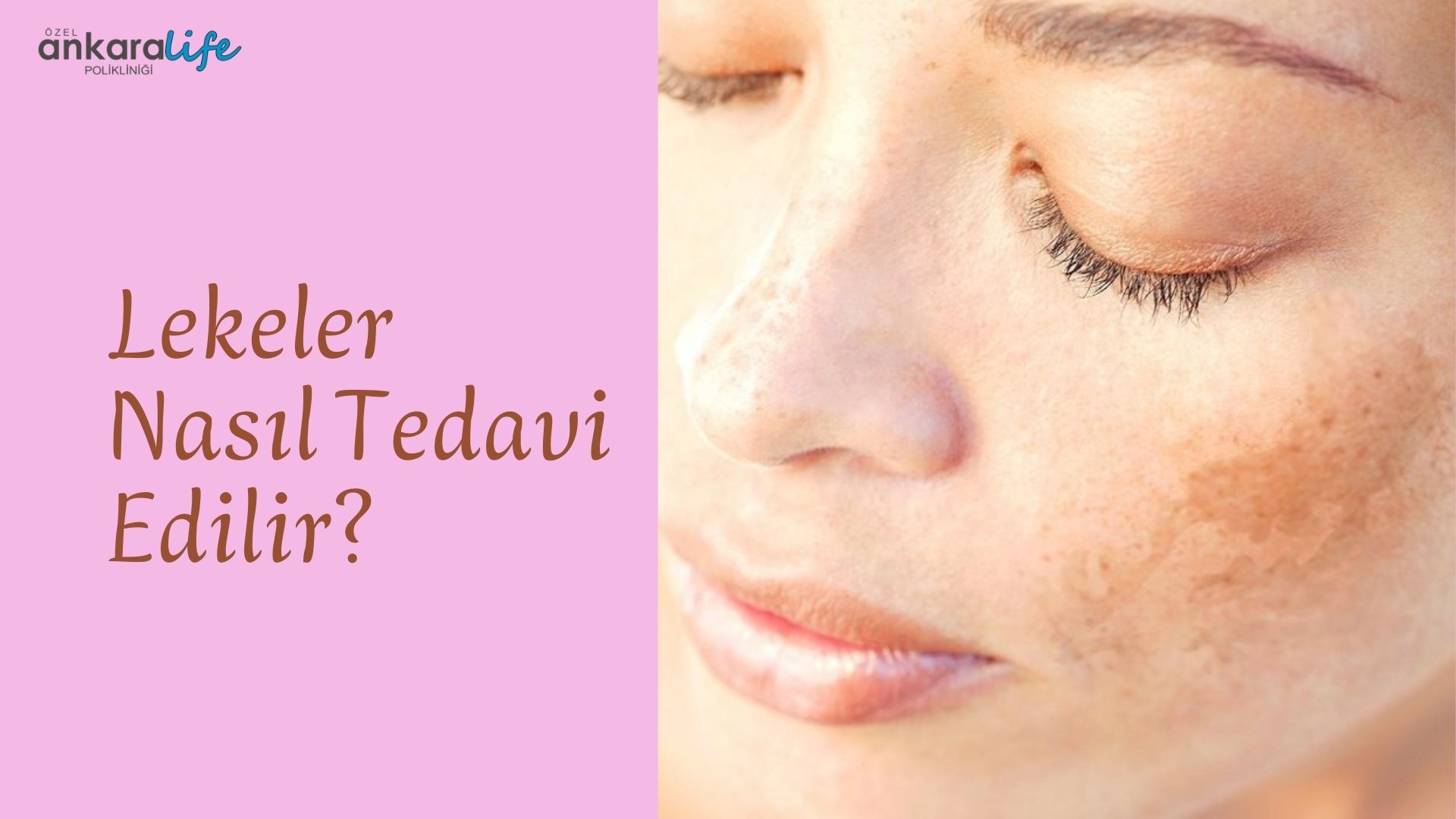

The best results in spot treatment are obtained from the combined treatment. In other words, not one treatment method, but many different treatments should be applied session by session. The treatment methods to be applied and the number of sessions are completely individual. E.g; Laser gives better results in white-skinned patients. If the stain is not very old, that is, if it is newly formed, fewer sessions are sufficient. Treatment methods used in the treatment of blemishes are:
CHEMICAL PEELING
It is the peeling of the upper layer of the skin (epidermis) with chemical solutions such as gluconic acid, TCA (trichloroacetic acid). Chemical peeling is a superficial procedure. It can't make the spots go away completely, but it brightens the color of the spots, makes the skin look brighter and healthier, most importantly, it prepares the skin for the next spot treatments. Chemical peeling is not done in summer, it is done only in winter, it is necessary to use sunscreen after the procedure.
It is the process of centrifuging the blood taken from the person, separating the healing cells and giving it to the same person with a needle. It is not enough to remove stains on its own, but it increases the amount of collagen and ensures better skin quality. Thus, it provides better results from stain lightening treatments.
FRACTIONAL CO2 LASER;
It can provide energy strong enough to go deep into the skin. In this way, it can be used both in spot treatment and in other treatments that require skin regeneration, such as acne scars and incisions. It should be used with caution in people with dark skin. Laser is not recommended in summer, it should be done in autumn and winter when the sun's effect is less. It is recommended to be very careful to use sunscreen after the procedure, even in winter.
Q-SWITCH ND-OIL LASER;
In today's technology, it is the most effective method used to open stains without damaging the skin. It is not a painful method. It does not form any crusting from the skin after the treatment. It is applied at intervals of 2 weeks.
Laser treatments are serious procedures that must be performed by a specialist doctor. If these procedures are not performed by specialist doctors, it may cause new spots to form.
As can be seen, a single treatment is not enough for the best results in stain treatment.
It is necessary to apply different treatments together according to the skin type of the person and the depth of the stain.
How many sessions of each treatment will be given depends on the response of the person to the treatment.
An average of 50% reduction can be achieved in 5-6 sessions.
Between sessions, you should use the recommended spot lightening creams. Sunscreen is essential to prevent blemishes from reappearing. Sunscreen; It should have a high protection factor (spf 50) and should be used 2-3 times a day in summer and winter.
 Call
Call
 Whatsapp