


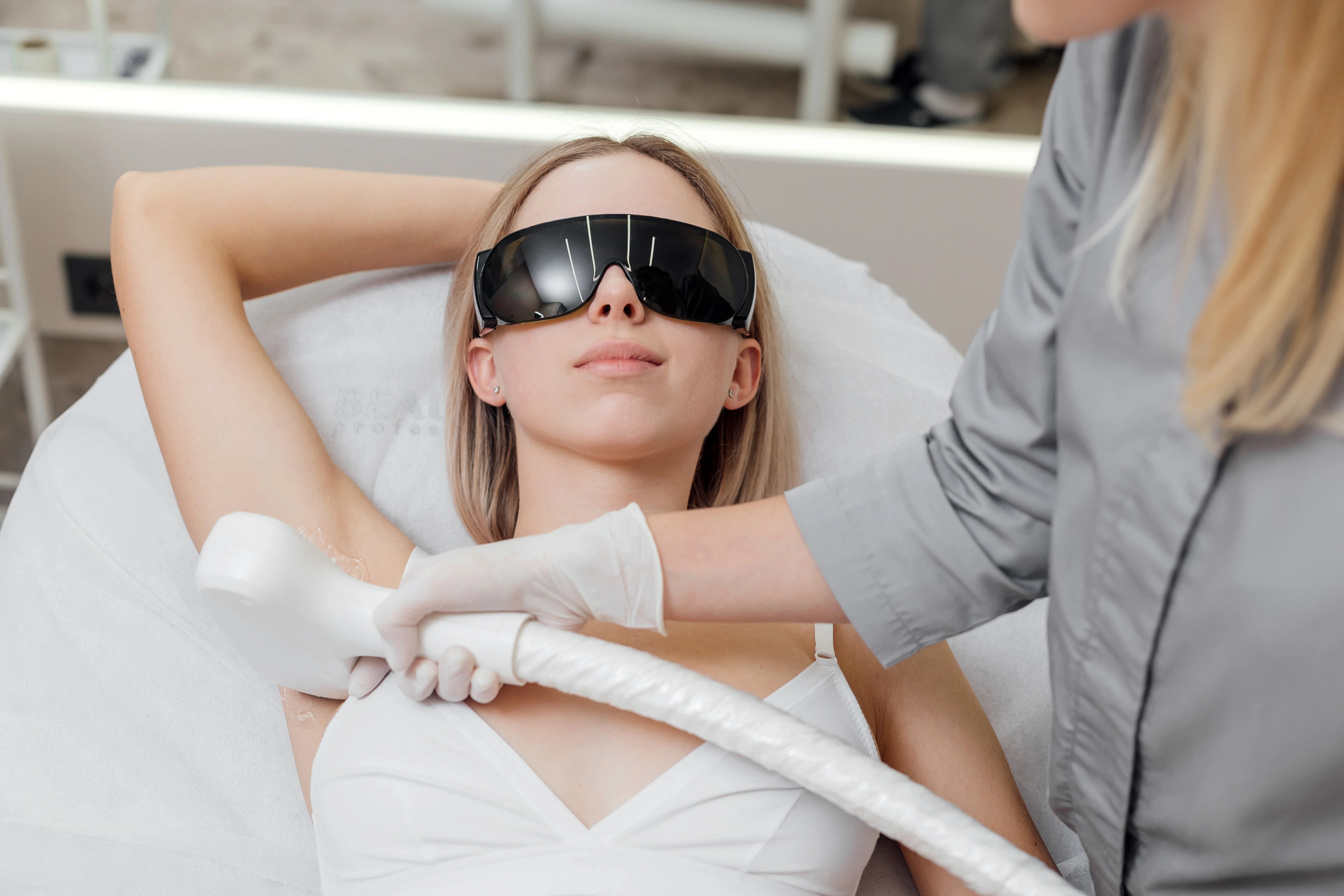

Underarm laser hair removal is a cosmetic procedure intended to achieve long-term reduction of unwanted hair. Laser hair removal uses light energy at a specific wavelength to target pigment within the hair follicles and create controlled damage to them. This process may gradually reduce future hair growth. Because the underarm area can be sensitive, appropriate device settings and individualized treatment planning are important.
Underarm laser hair removal is preferred by both men and women and may make regular hair removal routines more convenient. Reducing underarm hair may also make personal grooming easier for some individuals, particularly during the warmer months. Laser hair removal can be performed relatively quickly, depending on the treatment area and technology used.
Laser hair removal usually requires multiple sessions. The number of sessions varies according to factors such as hair structure, skin tone, treatment area, hormonal influences, and the laser system used. A treatment plan of approximately 6–8 sessions may be considered in some cases, but this is not a fixed number and additional sessions may sometimes be required.
Advantages of Laser Hair Removal
One of the main advantages of Laser Hair Removal is the possibility of achieving long-term hair reduction. Unlike temporary hair removal methods, laser treatment targets structures associated with the hair follicle and may gradually reduce the density and frequency of regrowth.
For some individuals, reducing the need for frequent shaving or waxing may also help decrease irritation associated with these methods. However, laser treatment itself may temporarily cause redness, warmth, swelling, or sensitivity.
Another practical advantage is treatment speed. Underarm laser hair removal sessions are generally relatively short because the treatment area is small. This can make the procedure convenient for individuals with busy daily schedules.
Effects of Waxing and Shaving on Laser Hair Removal
Waxing and shaving can affect preparation for laser hair removal in different ways.
Waxing removes hair from the root and is therefore generally avoided before laser hair removal. Since laser energy targets pigment associated with the hair follicle, removing the hair from the root may make the treatment less effective until the hair grows back.
Shaving, on the other hand, removes the visible portion of the hair while leaving structures within the follicle in place. For this reason, shaving is commonly recommended before laser hair removal when hair shortening is required.
The method used before treatment may also affect skin sensitivity. Waxing can temporarily irritate the skin in some individuals. Shaving may also cause irritation, cuts, or razor burn if performed improperly, so it should be done gently according to the instructions provided by the treatment center.
Should You Choose Waxing or Shaving Before Underarm Laser Hair Removal?
When preparing for underarm laser hair removal, shaving is generally preferred over waxing.
Because waxing pulls the hair from the root, it may temporarily remove the target needed for effective laser treatment. For this reason, waxing, tweezing, and epilating are usually avoided for a period before a laser session.
Shaving shortens the hair at skin level while leaving the follicle available for laser targeting. Depending on the device and treatment protocol, the practitioner may recommend shaving the area a certain amount of time before the appointment.
Since the underarm area may be sensitive, shaving should be performed carefully to avoid unnecessary irritation before treatment.
Which Method Is More Appropriate?
For preparation before laser hair removal, shaving is generally considered more appropriate than waxing because it does not remove the hair from the root.
Waxing may interfere with laser targeting by temporarily removing the hair from the follicle. If waxing has recently been performed, the practitioner may recommend waiting until sufficient hair growth has returned before beginning or continuing treatment.
The exact timing of shaving should be determined according to the instructions provided by the clinic or practitioner. Different laser systems and individual skin characteristics may require different preparation protocols.
What Should Be Considered Before Laser Hair Removal?
There are several points to consider before laser hair removal.
First, the treatment area should generally be clean and free from cosmetic products on the day of the procedure. Deodorant, creams, oils, or other products may need to be removed beforehand.
Second, excessive sun exposure and tanning should generally be avoided before treatment. Recently tanned or sunburned skin may be more sensitive and may require changes to treatment timing or laser settings.
It is also important to inform the practitioner about medications being used. Certain medications may increase skin sensitivity or affect treatment planning. Medication should not be discontinued without medical advice.
Underarm Laser Hair Removal Process
Underarm laser hair removal is generally a relatively short procedure.
Before treatment, the skin is evaluated and the area is prepared according to the practitioner's instructions. The laser device is then applied to the treatment area, delivering controlled energy toward the hair follicles.
Mild warmth, stinging, or a snapping sensation may be experienced during the procedure. The level of discomfort varies according to individual sensitivity and the technology used.
Several weeks are generally left between sessions to account for the hair growth cycle. The exact interval and total number of sessions vary from person to person.
Temporary redness or sensitivity may occur after a session. Appropriate moisturizing, avoiding unnecessary irritation, and following professional aftercare instructions can help support skin recovery.
In summary, shaving is generally preferred over waxing before laser hair removal because it leaves the hair follicle available for laser targeting. The timing of shaving and other preparation steps should be determined according to the recommendations of the professional performing the procedure.
 Call
Call
 Whatsapp